
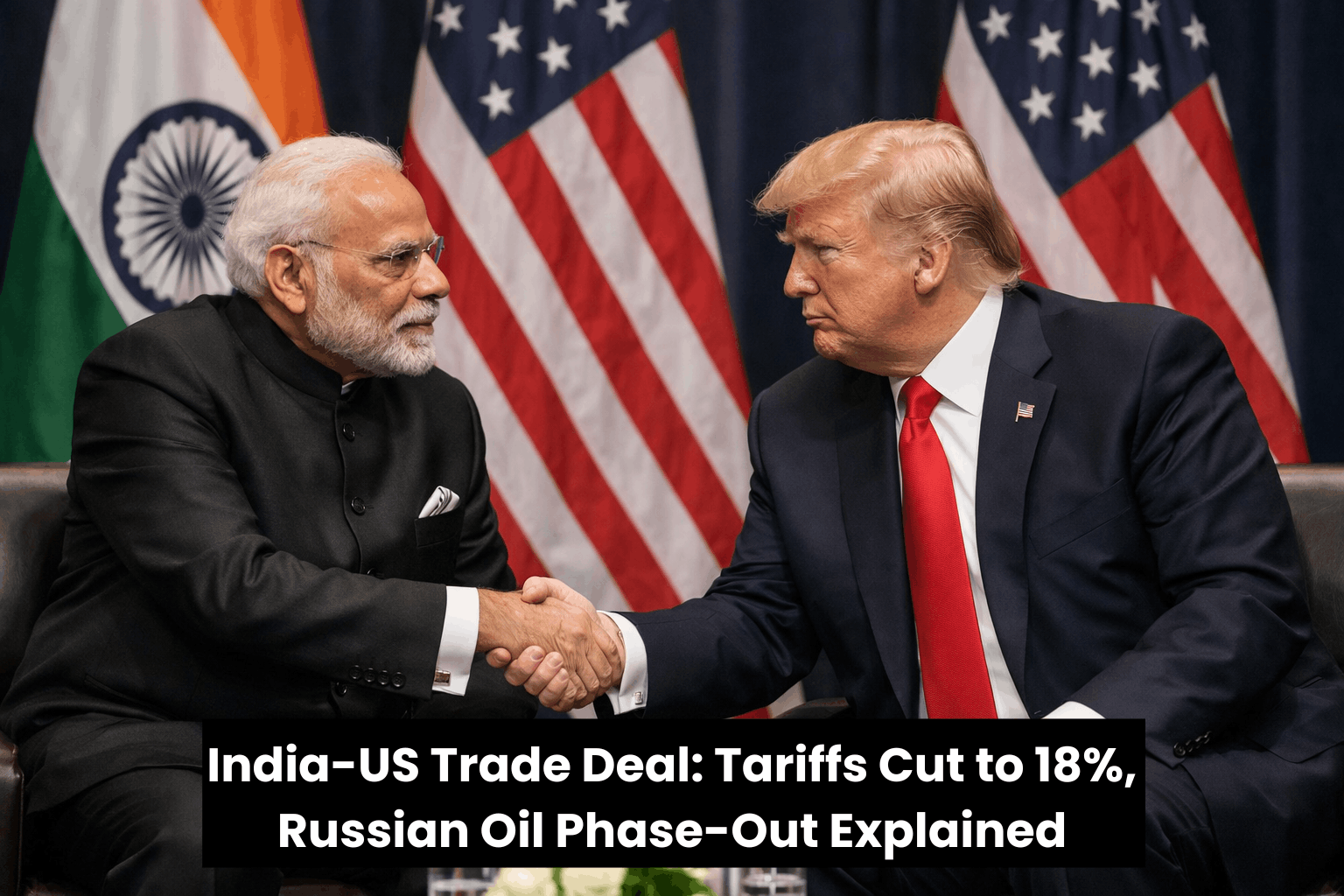
The surprise agreement ends months of tariff war, but discrepancies between Washington and New Delhi leave many questions unanswered regarding the India US trade deal.
Table of Contents
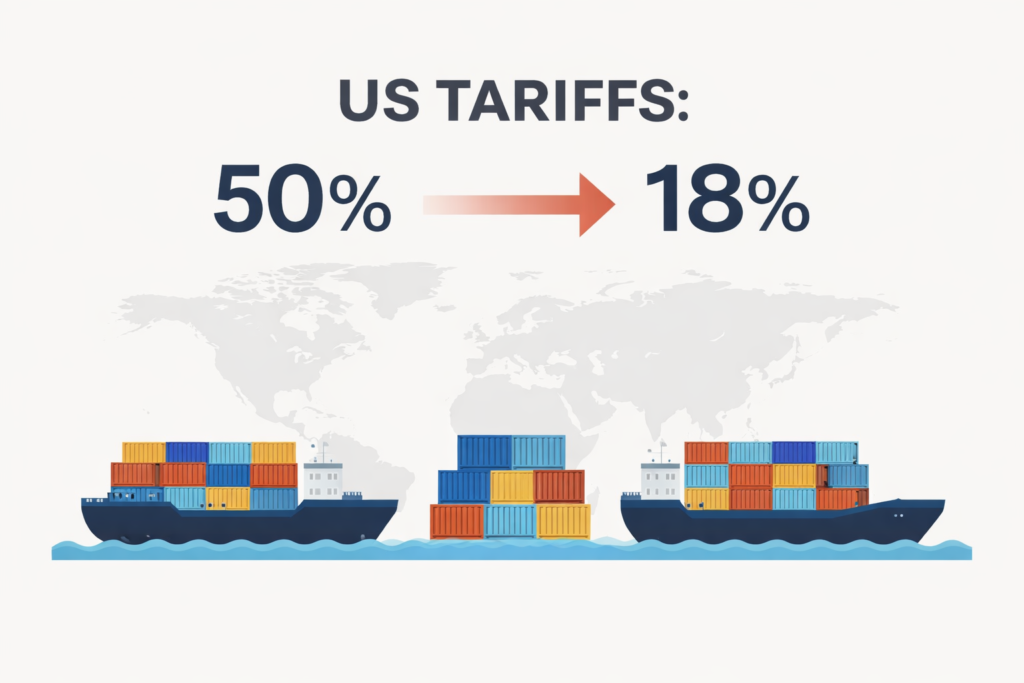
On February 2, 2026, US President Donald Trump announced that the United States would reduce tariffs on Indian goods from 50% to 18%, after Prime Minister Narendra Modi agreed to stop buying Russian oil and instead buy more American energy. While Indian officials have welcomed the tariff relief, they have not confirmed the complete freeze on Russian crude oil or the $500 billion purchase commitment claimed by Trump. This new arrangement is seen as a significant milestone in the India US trade deal. The India US trade deal is anticipated to reshape trade dynamics and benefit both nations significantly.
What India-US Trade Deal Actually Says (Facts vs Claims)
One of the main objectives of the India US trade deal is to enhance bilateral trade relations and economic cooperation.
The India US trade deal’s impact on the rupee remains a topic of significant interest among economists.
| Aspect | Trump’s Claim | India’s Confirmed Position | Status |
| US tariff on Indian goods | Reduced to 18% (from 50% = 25% reciprocal + 25% punitive) | Confirmed 18% rate | Effective immediately (after joint statement) |
| Russian oil purchases | India will “stop buying” and switch to US + Venezuela | Energy security is “supreme priority”; decisions guided by market conditions | Likely gradual reduction, not full stop |
| Indian tariffs on US goods | To zero | Not confirmed; agriculture/dairy protections remain | Partial opening expected |
| $500 bn US purchases | Committed | Not confirmed; existing pipeline + new areas mentioned | Unrealistic in short term |
Rupee & Market Impact (Very Positive Short-Term)
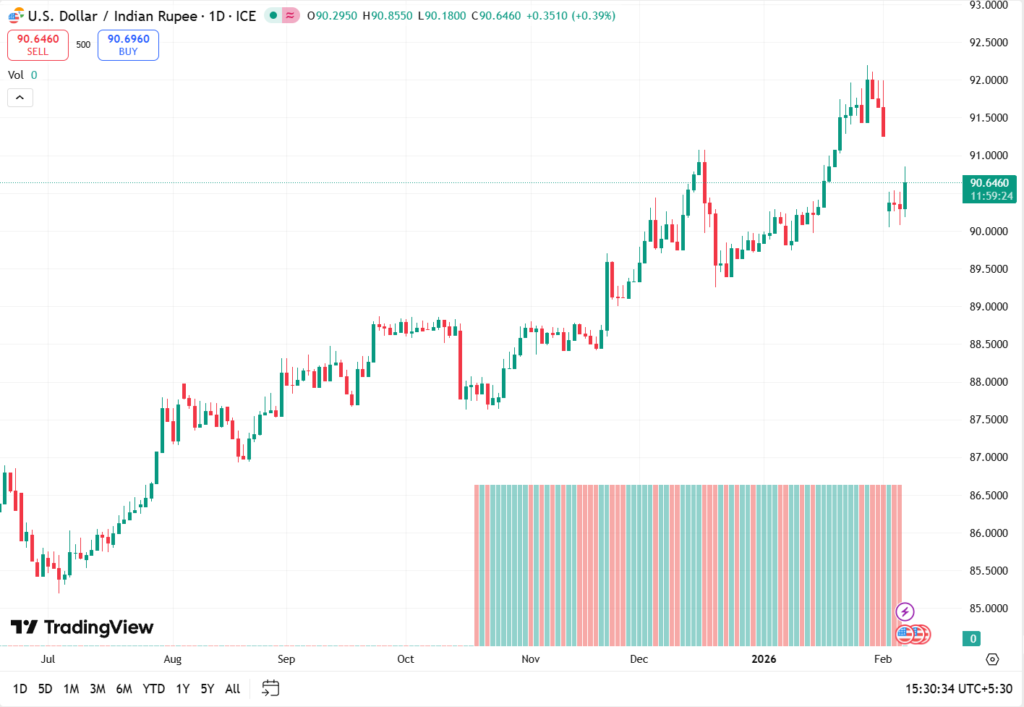
- The rupee jumped 1.3-1.5 per cent in a single session (February 3) – its best day in years – and closed at 90.27-90.40 against the dollar.
- The Nifty 50 initially rose ~ 2.5%; Export-dependent sectors (textiles, gems and jewellery, pharma, IT) witnessed robust growth.
- Bond yields fell; The sentiment of foreign investors improved dramatically.
Winners and Losers
The winners of the India US trade deal will likely include various sectors poised for growth.
Clear Winners
- Indian exporters (textiles, diamonds, pharmaceuticals, auto parts) → are now competitive again in the US market.
- Indian stock markets and MSMEs → Relief rally.
- U.S. oil and energy companies → potential new market if India shifts volumes.
- American Farmer and Manufacturer → Easy access to India (partial).
Losers / Pain Points
- Indian refiners (IOC, BPCL, Reliance) → were getting huge discounts on Russian crude oil; Switching to expensive US / Venezuelan crude will reduce margins and increase fuel prices.
- Russian economy → India was buying about 1-1.8 million bpd; The loss of this revenue would affect Moscow’s war funding.
- The prices of petrol and diesel in India are skyrocketing.
- Advocates of strategic autonomy in New Delhi → Over-dependence on US / Venezuela for energy.
Global Energy Shifts
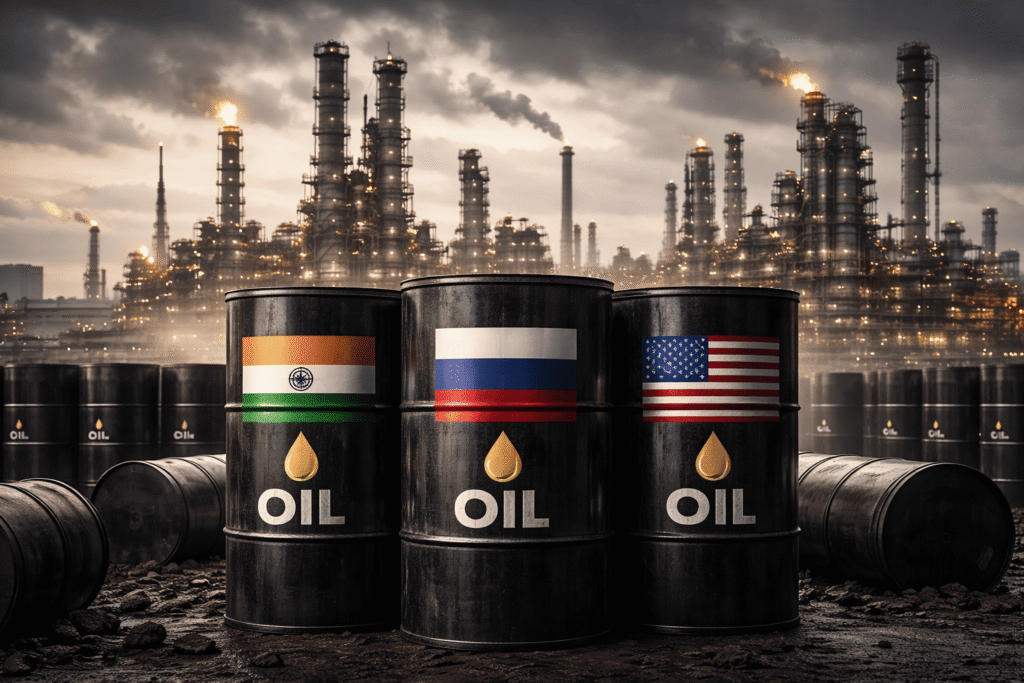
The India US trade deal may also lead to shifts in energy sources and dependencies.
India was the world’s largest buyer of discounted Russian crude oil after the 2022 sanctions. Recently the share of Russian oil in India’s basket had fallen from its peak ~40% to ~30-35%.Making a complete change is technically difficult (refineries are tuned to the Urals) and politically sensitive. Large discounts on Russian oil have already been found in the last 10 days – refiners are waiting for clarity from the government. If India really significantly reduces the amount of Russian oil, global oil prices could rise and Russia will lose an important revenue source.
What It Really Means
The Modi-Trump deal marks the biggest thaw in bilateral trade ties in years and brings relief to Indian exporters. But the real test will be in the details of the joint statement coming in a few days and the actual implementation of the gradual elimination of any Russian oil. For now, markets are happy, refiners are nervous, and the world is watching to see if New Delhi can strike a balance between energy security, strategic autonomy and a new friendship with Washington.
As stakeholders evaluate the trade agreement between India and the US, the global market will react in a fluid manner. The effects of this trade deal go beyond short-term economic shifts. In the end, the effectiveness of the India-US trade deal depends on successful negotiation and execution.
Got the tiger888apk app. Pretty straightforward setup. Nothing too flashy but it works. Worth a try if you’re after basic fun. tiger888apk
Just checked out aajogologin and it seems pretty straightforward. Hopefully, signing up is as easy as it looks! aajogologin
Looking to get into some action? ber365login could be the key. Let’s hope the login process is a breeze and the games are fun! ber365login
He probado varios sitios, pero Win92 tiene algo especial. Me gusta la variedad de juegos y la atención al cliente siempre es rápida. Dale una oportunidad a win92, ¡quizás te enganches como a mí!
Yo, 0066bet32’s legit! Been playing there for a while now, and honestly, the payouts are pretty solid. Give it a shot, fam. Check it out at 0066bet32.
57vcasino? Alright, alright, alright! Not bad, decent selection, and the customer service is pretty responsive. I’d recommend giving it a try! Find them at 57vcasino.
Jogo Ouro Bet is pretty slick! Had some decent wins on there lately. Definitely worth checking out if you’re looking for something new. Check it out: jogo ouro bet
If you are trying to find live scores on 7m ty so ma cao, this site shows all the important happenings in the area. Click here: 7m ty so ma cao
Hey guys, found some pretty sweet games on Jogos de Ouro Bet! Really digging the selection. Give it a shot! Check it out here: jogos de ouro bet